

 ChatGPT
 Claude
 Grok
Grok
 Perplexity
 Gemini
Kerala already knows what a tech cluster looks like. Big IT parks stand in Thiruvananthapuram and Kochi. So why does a small campus in Manjeri get the “Silicon” nickname, and is it even the same kind of project?
- Technopark and Infopark are large, government-backed IT parks in Kerala’s cities. Silicon Jeri is a smaller, privately driven campus in a town.
- These are three different models, not three rivals. They solve different problems for different people.
- The big parks are far more established. Manjeri is much earlier, and its results are still unproven.
- Ecosystems tend to form slowly, through people who stay, share ideas, and start new things nearby.
- The useful question is not “which is bigger?” It is “what can each model do that the others cannot?”
What are Technopark and Infopark, and how do they differ from Silicon Jeri?
Technopark is an IT park in Thiruvananthapuram. Infopark is an IT park in Kochi. Both are large, planned campuses backed by the state, and both were built to bring IT companies into Kerala.
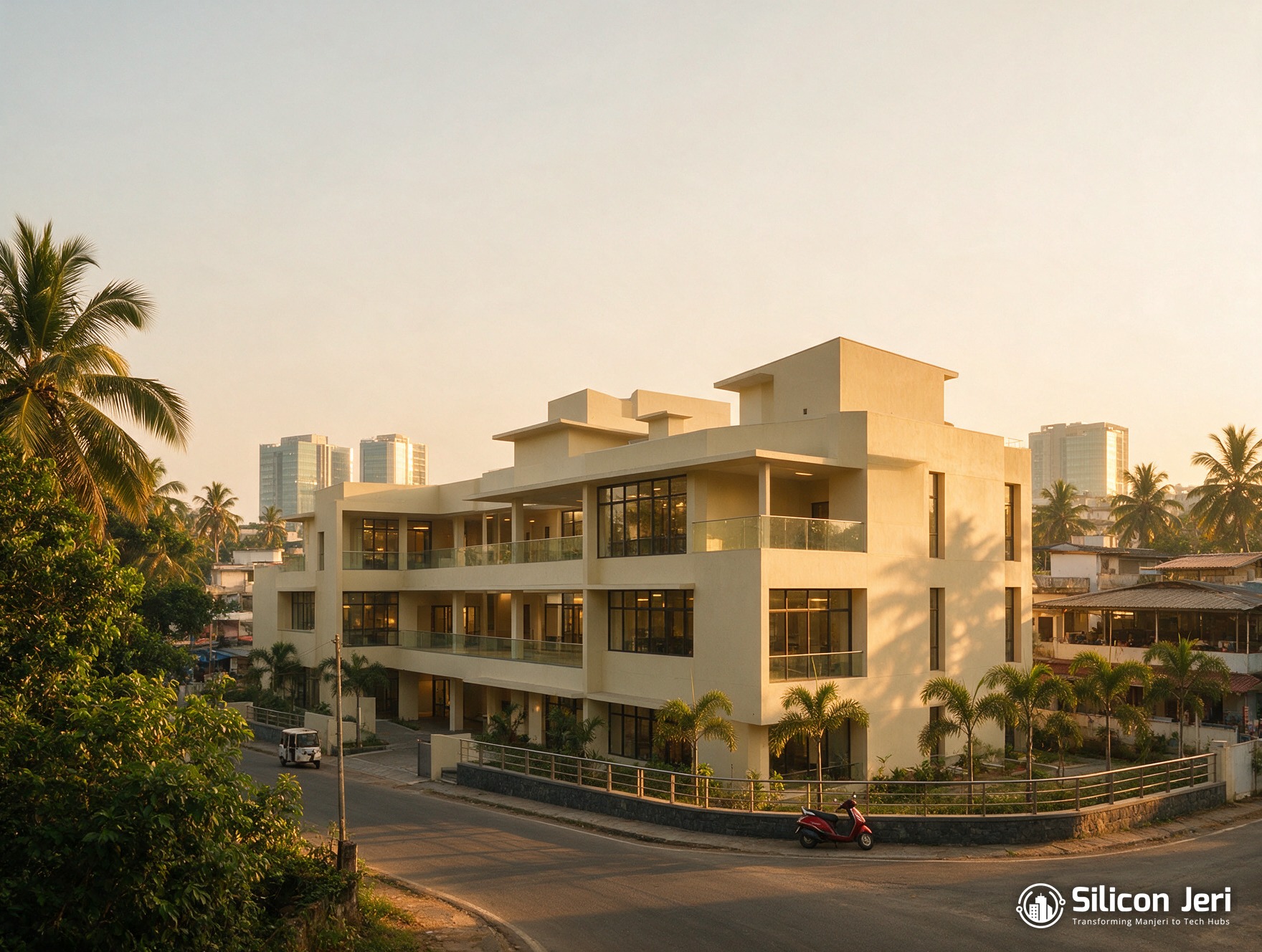
Silicon Jeri is different. It is a coworking campus in Manjeri, a town in Malappuram district. It is privately driven, much smaller, and much newer.
It also helps to be clear about one thing. Silicon Jeri is not an employer. It is a place where founders and teams from different companies work under one roof.
So the three names describe different things. Here is where the real differences start to show.
Who starts a tech cluster, and does it change the result?
Yes, it often does. The starter shapes the speed, the size, and the kind of company that shows up.
- A government starts a park. A state can set aside land, plan roads and utilities, and invite large companies in one move. That approach can build scale, but it usually needs long planning and public money.
- A private group starts a campus. A private founder or company can move faster on a smaller idea. The trade is that it has less land, less money, and less pull than a state program.
Neither route is better in every case. A government park suits large employers. A private campus can suit a single founder with a small team and a big idea.
Here is the part most people miss. Who starts the cluster also decides who feels invited. A large company may feel at home in a planned park. A first-time founder from a small town may not.
How do the three models compare side by side?
A simple table helps here. Treat it as a general guide, not a measurement. Real parks vary, and the details change over time.
| Feature | Technopark and Infopark | Silicon Jeri |
|---|---|---|
| Scale | Large, planned campuses | A much smaller campus |
| Who starts it | Usually the state, with public backing | A private effort |
| Location | Big cities | A smaller town |
| Typical companies | Often established IT and service firms | Often founders, small teams, and early startups |
| How the ecosystem forms | Around many companies over a long time | Around a few people, still forming |
| Stage | Well established | Much earlier, unproven |
Look at the last row again. That is the row that matters most for honest comparison. It would be unfair to judge a young campus by the yardstick of parks that have had a long head start.
Why does location matter so much?
Because location decides who can join. A big city already has colleges, housing, transport, and a large pool of workers. A company can land there and find much of what it needs.
A town works differently. It may have fewer of those things, but it has something the city often lacks. It has people who want to stay close to home.
Think of an illustrative example, not a real person. Picture a graduate named Anjali who grew up near Manjeri. She wants a career in tech. Her options used to be a move to a big city or a change of plan. A campus in her own town adds a third option.
That is the core idea behind a town-based hub. It does not replace the city parks. It offers a different door for a different set of people.
Now the harder question. Does one campus in a town really grow into an ecosystem?
How does an ecosystem actually form around a tech cluster?
Slowly. A building alone does not create an ecosystem. People do, and only when they stay long enough to build habits and trust.
Many tech ecosystems seem to grow in a similar order, though it varies from place to place:
- First, a shared place. People who do similar work start to share one location.
- Next, shared ideas. Conversations, questions, and quick favors begin to pass between teams.
- Then, new companies. Some people who worked nearby leave to start their own things, often close by.
- Finally, supporting services. Trainers, advisers, and local suppliers appear once there is steady demand.
The big parks have gone through much of this cycle, at least in part. Manjeri is near the start. It is not yet clear how far that cycle will go.
That honesty matters. A young campus should not claim the results of an old ecosystem. It should be judged on the first steps, and those are visible mainly in the people who choose to work there.
Are these models rivals, or do they work together?
They are not rivals. They serve different needs, and one does not cancel the other.
A large government park is built for scale. It can host big teams and give a city a firm place on the tech map. A small private campus is built for closeness. It can give a founder in a small town a place to start without a long move.
In fact, the models could feed each other. Some founders may start small in a town and later grow toward a bigger city. Some people from the city parks may want a quieter base. This kind of flow is possible, though it is not yet clear how often it happens in Kerala.
So the fair picture is not a race. It is a range. Kerala has a large-scale model in its cities and an early, small-scale model in one town. Both can exist at once.
There is a natural follow-up question. Why has the small-town model not spread to other towns yet?
What can a small town learn from the big parks, and what can it not copy?
A town can learn a lot, but it cannot copy everything.
What it can learn. Good planning matters. Reliable infrastructure matters. And a steady flow of new companies matters more than any single opening day.
What it cannot copy. A town does not have the land, the public funding, or the sheer size of a city. It also cannot count on large employers arriving all at once.
That is why the town model has to rely on different strengths. It leans on local talent, closer relationships, and founders who care about the place they come from.
It is also why it is wise not to oversell the result. A campus can help create chances. Whether those chances turn into many jobs is a separate question, and the answer is not simple.
So what should we watch as Manjeri grows?
Instead of asking whether Manjeri will match the big parks, watch a few smaller signs. They are more honest, and they are easier to check over time.
- Do founders stay? A campus works better when teams settle in instead of passing through.
- Do new companies start nearby? This is one early sign that an ecosystem is forming.
- Do local students see a path? Interest is easy to claim and harder to confirm, so look for real steps.
- Does the effect spread? The clearest sign would be a benefit that reaches past the campus itself.
None of these is guaranteed. They are simply reasonable things to watch, and it may take years before the answers are clear.
A useful next step for anyone curious is to visit and see the campus for yourself. You can call +91 97783 49944 to ask questions.
Related reading: To see why the town model has not been repeated yet, read why nobody in Kerala has copied the Silicon Jeri model yet. For a grounded view on jobs, see what a tech hub can and cannot do for jobs. For general background, see Wikipedia’s page on Technopark in Thiruvananthapuram, one of Kerala’s large IT parks.
Frequently Asked Questions
Is Silicon Jeri a rival to Technopark or Infopark?
No. They are different models. Technopark and Infopark are large, government-backed IT parks in cities. Silicon Jeri is a much smaller, privately driven campus in a town. They serve different needs, and they can exist side by side without competing for the same people or companies.
How is a coworking campus different from an IT park?
An IT park is usually a large, planned area built to host many established companies, often with public backing. A coworking campus is generally smaller and shared by founders and teams from different companies. It tends to suit early startups more than large employers, though the exact mix varies from place to place.
Does Silicon Jeri employ the people who work there?
No. Silicon Jeri is a coworking campus, not an employer. People who work there are usually founders or team members of companies based at the campus. Any role tied to Silicon Jeri is with one of those companies, not with the campus itself.
How long does it take a tech ecosystem to form?
There is no fixed answer, but it is usually slow. An ecosystem needs people who stay, share ideas, and start new companies nearby. That often takes many years. Manjeri is much earlier in this process than the big city parks, so its results are still unproven.
Can a small town build a tech cluster without a large government park?
It may be possible, but it is not proven. A small town can rely on local talent, closer relationships, and private effort. It cannot match the land, funding, or size of a city park. Manjeri is an early test of whether the smaller, privately driven approach can grow.