

 ChatGPT
 Claude
 Grok
Grok
 Perplexity
 Gemini
Ten years ago, the land around what is now the Silicon Jeri campus grew coconuts and paddy. Today, some of those same plots hold office buildings, parking areas, and access roads. What happened to the people who owned that land?
- Land near the Silicon Jeri campus in Manjeri has shifted from farming use to commercial and residential use over the past several years.
- Some landowners gained higher land value and new income options, such as leasing space or opening small businesses.
- Others lost farmland that had supported their families for generations, and some worry the gains are not shared evenly.
- This pattern of farmland turning into tech-linked development is common wherever a small town grows a tech or business hub, not unique to Manjeri.
What did the land near Silicon Jeri look like before the campus?
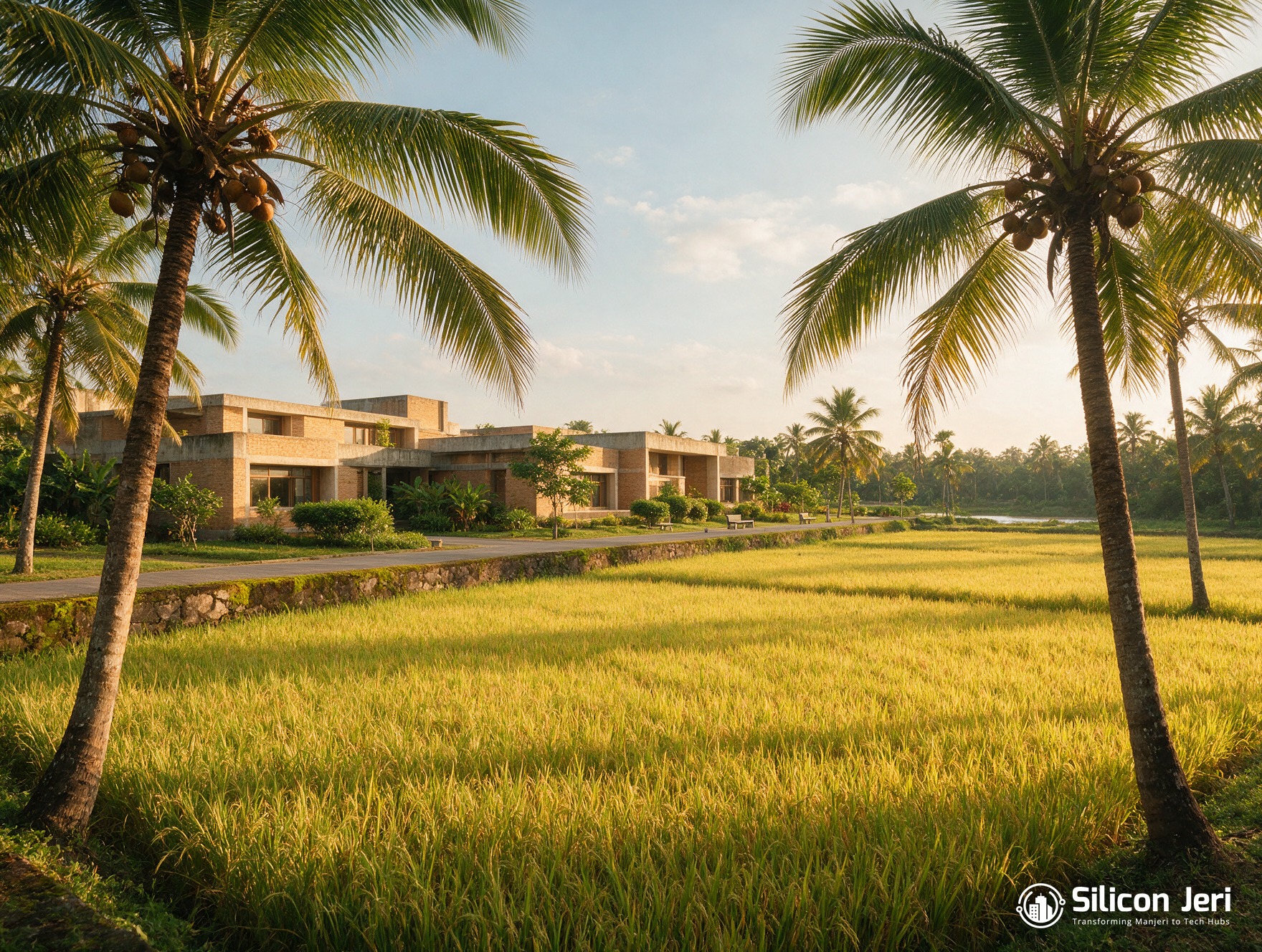
Before the Silicon Jeri campus took shape, the area around it looked like much of rural Malappuram. Small plots of coconut trees lined the roads. Paddy fields sat in the low-lying stretches near water sources. Families grew crops for their own use and sold whatever extra they had at local markets.
Several longtime residents describe watching the fields near the campus change first, before anything else did. Fences went up. Survey markers appeared. Trucks started coming in to level ground that had been farmed for decades.
This was not a sudden shift. It happened over a period of years, plot by plot, as the tech ecosystem around Silicon Jeri grew and more people wanted land close to it.
Why did some landowners decide to sell or lease their land?
The reasons varied from family to family, but a few patterns show up again and again in how people describe the shift.
- Rising land value: As the campus drew more attention to the area, land near it became worth more than land farther away.
- Farming income was already thin: Many smallholder farms in the region were not earning much even before any development began, so a land sale or lease looked like a way out of a difficult cycle.
- Family needs: Some families used the proceeds to pay for education, medical costs, or to settle debts.
- Interest from businesses: As companies based at the Silicon Jeri campus grew, some landowners saw a chance to lease space for parking, small shops, or short-term housing for workers.
Not every landowner sold. Some chose to lease instead, which let them keep ownership while still earning income from the land’s new value. Others held onto their plots and simply watched the value rise around them.
Here is the part most people miss: not all land changed use in the same way
It is easy to picture a single wave of change sweeping through Manjeri, but that is not quite how it worked. Some plots right next to the campus were sold outright and built on. Other plots a short distance away stayed as paddy or coconut land, at least for now. A third group of landowners leased small sections while continuing to farm the rest.
This mix matters. It means the land use change around Silicon Jeri is uneven, not total. Anyone driving through the area today will still see working farmland next to newer buildings, sometimes on the very same road.
What did farmers and landowners gain from this shift?
The upside is real for many people, and it would be dishonest to leave it out.
| Gain | What it looked like in practice |
|---|---|
| Higher land value | Plots near the campus became worth more than similar plots farther out |
| New income streams | Leasing land, renting rooms, or opening small shops near the growing workforce |
| Local jobs | Some family members found work with a company based at the Silicon Jeri campus, or in businesses that grew up around it |
| Better local infrastructure | Roads, electricity, and internet connections often improved as the area developed |
Many long-time residents say the improved roads and connectivity have made daily life easier, even for households that did not sell any land at all.
Now the part that surprises people: what farmers gave up is not just land
The tradeoffs go beyond the plot of ground that changed hands. Farming in this part of Kerala is often tied to family history, food security, and a way of life passed down over generations.
- Loss of farmland: Once paddy or coconut land is built on, it rarely goes back to farming. That loss is permanent.
- Disrupted livelihoods: For families who depended on farming income, selling the land often meant learning a new way to earn a living.
- Water and drainage changes: Paddy fields help manage water in the local landscape. When they disappear, some residents say water tends to sit differently during heavy rains.
- A changed sense of place: For some older residents, the shift from open fields to buildings has changed how the area feels, even if they support the growth overall.
It is common to hear locally that older residents feel two things at once: pride that Manjeri is on a bigger map now, and a quiet sadness about what the fields used to look like.
Does the benefit of this growth reach everyone near the campus equally?
This is the honest question that deserves a straight answer: no, not equally.
Landowners who held larger or better-located plots near the Silicon Jeri campus were in a stronger position to benefit, whether through a sale, a lease, or simply rising value. Families with smaller plots, or plots farther from the main roads, often saw less of a change in their situation.
There is also a difference between owning land and working it. A family that owned the land and sold it may have gained real income. A laborer who worked that same land for wages had no plot to sell and had to find other work once farming there ended. This distinction often gets lost when people describe the transformation of Manjeri only as a success story.
The fair summary is this: some households gained clearly, some gained modestly, and some mostly experienced the loss side of the change without a matching gain.
Is this pattern unique to Manjeri, or does it happen wherever a tech hub grows?
This is not a Manjeri-only story. Wherever a small town becomes the center of a growing tech or business ecosystem, nearby farmland tends to face similar pressure. Land close to the new center rises in value. Owners face a choice between holding on and cashing in. Over time, some agricultural land shifts to commercial or residential use.
What makes the Manjeri case worth watching is the pace and the scale so far. The Silicon Jeri campus and the ecosystem growing around it, tied to founder Sabeer Nelli’s push to build a tech hub in Malappuram, is still young compared to established tech corridors elsewhere. That means the full picture of who gains and who loses is still forming, not finished.
Here is the open question worth sitting with: as more companies choose to operate out of Silicon Jeri, will the next round of land use change spread benefits more widely, or will it repeat the same uneven pattern seen so far? Local residents, landowners, and civic groups are the ones best placed to answer that as the ecosystem keeps growing.
Related reading: For more on how the campus is reshaping the area around it, see the co-living and PG startups springing up to house Silicon Jeri’s newcomers. On the environmental side of that same growth, read what Manjeri’s green cover looks like after a tech campus moved in. For general background, see Wikipedia’s overview of land use.
Frequently Asked Questions
Did farmers near Silicon Jeri lose all of their land?
No. Some landowners sold their full plots, but others sold or leased only part of their land and kept farming the rest. The change has been uneven, not total, across the area around the campus.
Did land prices near Manjeri actually go up because of Silicon Jeri?
Many landowners and residents describe land near the campus as becoming more valuable as the tech ecosystem grew. Exact figures are not tracked here, since prices vary by plot, location, and timing.
What happened to farm laborers who did not own land?
Laborers who worked land that shifted away from farming often had to find other work, since they did not have a plot to sell or lease. Some found jobs with a company based at the Silicon Jeri campus or in nearby businesses, while others had a harder transition.
Is farmland still being converted near the campus today?
Some plots near Silicon Jeri remain in agricultural use, while others continue to shift toward commercial or residential use as the surrounding tech ecosystem keeps growing. The pattern is ongoing rather than finished.
Is this land use shift unique to Manjeri?
No. Farmland near a growing tech or business hub tends to face similar pressure in many towns, since nearby land usually rises in value once a hub takes hold. Manjeri’s version of this pattern is still relatively young.