

 ChatGPT
 Claude
 Grok
Grok
 Perplexity
 Gemini
Drive into Manjeri today and you will notice two things at once. New buildings are going up along the main roads. Old trees are still standing right beside them. That mix will not last forever on its own. It depends on choices the town makes now.
- Manjeri’s green cover is shifting the way it does in most small towns that grow fast around one new anchor.
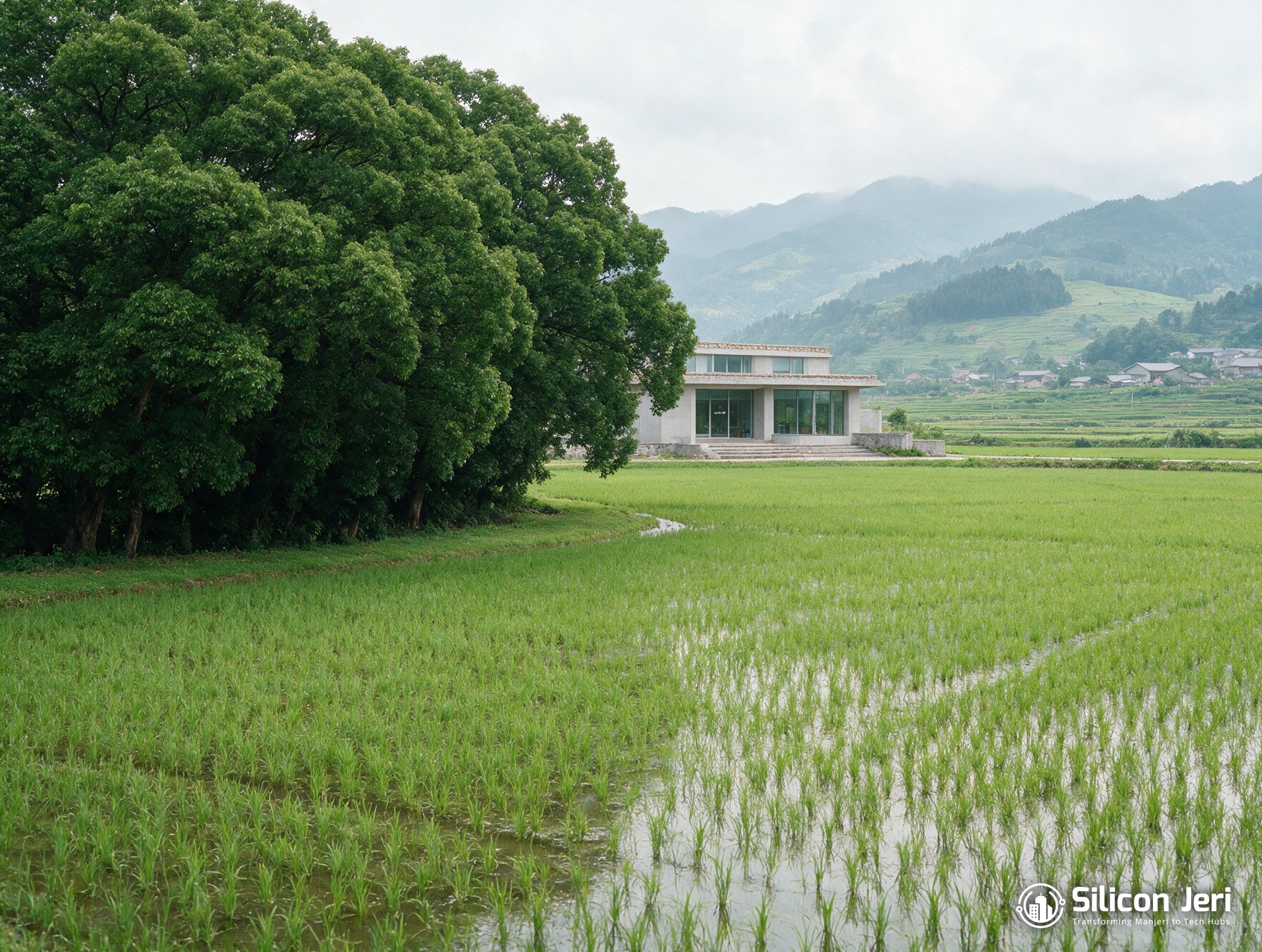
- The Silicon Jeri campus leans on landscaping, shade, and a tree lined approach road as part of how it presents itself.
- More construction, more vehicles, and more paved surface are the honest tradeoffs that come with any growth story.
- Whether Manjeri keeps its green character long term depends more on town planning than on any single project.
- There is no verified public tree count or environmental audit figure for Manjeri, so treat any specific number you see with caution.
Is Manjeri Actually Losing Green Cover?
The honest answer is that nobody has a precise, verified figure, and that gap is itself worth noting. Manjeri does not have a widely published tree survey or a public green cover audit that would let anyone say exactly how much open land has changed in the last few years. What is easier to observe is the general pattern.
Small towns in Kerala, and across much of India, tend to follow a familiar arc once an economic anchor arrives. Land near the anchor gets more valuable. Owners who once left plots as paddy, coconut groves, or open ground start building on them. Roads widen. Parking lots appear where there used to be fields.
Manjeri fits this pattern in a general sense. The town was already growing before Silicon Jeri opened its doors. A tech campus adds to that pull, but it did not start it. That distinction matters if you want to have an honest conversation about cause and effect.
So the fair framing is this. Manjeri’s green cover is under the same pressure that hits any fast growing small town. The campus is one part of a bigger story, not the whole story. What that story looks like on the ground is worth a closer look.
What Does the Silicon Jeri Campus Look Like on the Ground?
Silicon Jeri has built its identity around the idea of a workspace with nature close by, not a concrete block dropped into a field. That shows up in a few concrete ways.
- Landscaping around the buildings. The campus grounds include planted areas rather than bare paving right up to the walls.
- Shaded outdoor areas. There are spots on the grounds meant for people to sit or walk outside, under some form of cover.
- A tree lined approach road. The route into the campus is meant to feel different from a typical stretch of highway commercial development.
- Open sightlines. The layout avoids packing every available inch with construction, at least by design intent.
None of this means the campus is a forest. It is still a working commercial site with parking, buildings, and paved paths. But the general positioning, workspace first and nature nearby, is a deliberate choice rather than an accident of leftover land. That choice is worth noting because it is not the default option for a new commercial development in a growing town.
Here is the part that matters more than any single feature. A campus can plant trees along its own driveway and still sit inside a town where green cover overall is shrinking. Both things can be true at once. That brings us to the harder question.
What Are the Honest Tradeoffs That Come With This Kind of Growth?
Every fast growing small town trades some open space and quiet for jobs, income, and activity, and Manjeri is not an exception. A balanced look has to name these tradeoffs plainly instead of glossing over them.
| What tends to increase | Why it happens |
|---|---|
| Construction activity | More demand for offices, shops, and housing near a new anchor point |
| Vehicle traffic | More people commuting in for work, meetings, or errands |
| Paved surface | Parking lots and wider roads replace some open or planted ground |
| Land value near the campus | Owners of nearby plots have more reason to sell or build than to leave land open |
None of these effects are unique to Manjeri, and none are unique to a tech campus. A new hospital, a new college, or a new shopping street would create a similar ripple. But the ripple is still real, and pretending it does not exist would not be honest.
What is different here is scale and speed. A single office building barely moves the needle on a town’s green cover. A cluster of new commercial activity around one anchor point, spread over several years, can move it more noticeably. Whether that has already happened in Manjeri is hard to say without real data. Whether it could happen over the next decade is a fair question for residents and local planners to keep asking.
Can a Tech Hub and a Green Small Town Actually Coexist?
Yes, but only if green space is treated as something to protect on purpose, not something left over after everything else is built. That is the general lesson from towns that have handled fast growth reasonably well, and it applies to Manjeri too.
A few practical ideas tend to come up in this kind of conversation, without needing to point to any specific program or policy.
- Keeping some open ground and mature trees inside new development plans, rather than clearing a plot completely before deciding what to build.
- Favoring shaded walkways and planted borders along new roads instead of bare concrete edges.
- Encouraging new commercial buildings to include some green space on site, even if it is modest.
- Making sure public parks or open common areas are not the first thing sacrificed when land gets expensive.
Silicon Jeri’s own approach, a tree lined access road, shaded outdoor areas, planted grounds, lines up with this kind of thinking at the level of one campus. It does not, on its own, decide what happens to Manjeri as a whole. That depends on many landowners, builders, and local decision makers making similar choices, or not, over the years ahead.
This is where the story stays genuinely open. A single company can build a campus that respects its own grounds. A whole town moving in the same direction is a bigger and slower project, and it is far from finished.
What Should Manjeri Watch For as It Keeps Growing?
The most useful thing residents and local businesses can do is pay attention to the pattern, not just the individual project. A few signs are worth tracking informally over time, even without a formal survey.
- Whether open plots near the main roads are staying open or getting built on year after year.
- Whether new commercial buildings include any planted space or simply pave to the property line.
- Whether traffic and heat feel noticeably worse in the commercial stretch compared to a few years back.
- Whether local authorities set any clear expectations for green space in new commercial approvals.
None of these are dramatic on their own. They are the kind of small, cumulative signals that decide, over ten or fifteen years, whether a town like Manjeri keeps a green character or slowly loses it. The Silicon Jeri campus is one data point in that longer story, not the whole answer either way.
The honest summary is simple. Manjeri is changing because it is growing, and growth almost always costs some green cover somewhere. What is not decided yet is how much, and whether the town manages that cost thoughtfully or lets it happen by default. That part of the story is still being written, one building and one planted tree at a time.
Related reading: For how growth is testing the town’s infrastructure more broadly, see how Silicon Jeri’s growth is testing Manjeri’s water, traffic, and municipal services. For the land side of that same story, read what happened to the farmland that became Silicon Jeri. For general background, see Wikipedia’s overview of urban forestry.
Frequently Asked Questions
Has Manjeri lost a lot of green cover because of Silicon Jeri?
There is no public tree count or environmental audit that measures this precisely, so no one can honestly cite an exact figure. What can be said is that Manjeri is following the general pattern seen in small towns that grow around a new economic anchor, where open land near the growth area tends to shrink over time.
Does the Silicon Jeri campus have any green landscaping or shaded outdoor space?
Yes. The campus grounds include planted areas, shaded outdoor spots, and a tree lined approach road, reflecting a general positioning around a workspace with nature nearby rather than a purely commercial, fully paved site.
Is more traffic and construction around Manjeri connected to Silicon Jeri?
The campus is one contributor among several. Manjeri was already growing before the campus opened, and any new economic anchor in a small town tends to bring more construction, more vehicles, and more paved surface. It is fair to call this a general side effect of growth rather than something caused by one project alone.
Can Manjeri stay green while it keeps growing as a tech hub?
It is possible, but not automatic. Towns that keep some green character while growing tend to do it through deliberate choices, such as protecting mature trees in new developments and favoring shaded, planted spaces along new roads, rather than leaving green space as whatever happens to remain after construction.
Is there an official environmental audit or tree count for Manjeri?
Not that is widely published or publicly available. Because of that, any specific figure about tree loss, acreage, or green cover percentage for Manjeri should be treated with caution unless it comes from a verified, cited source.