
Tech Hub in Malappuram: How a Quiet Kerala Town Started Building Its Startup Scene
An honest snapshot of Malappuram's emerging tech scene - the talent, the gaps, and the role coworking plays in the foundation.

On this page
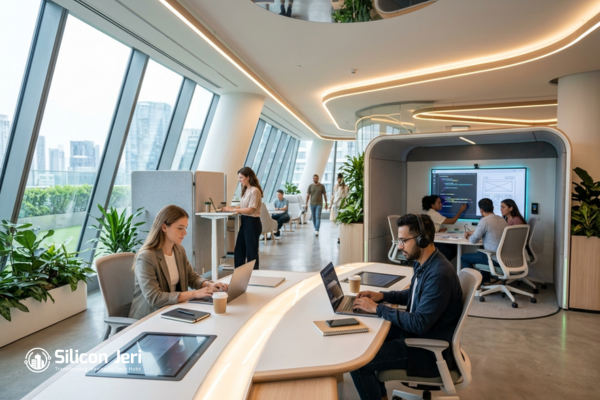
A scene built by people who show up
Talent. NRI capital. KSUM. Coworking. The pieces are here.
Key takeaways
- Malappuram is early-stage as a tech hub, not late-stage — small, scrappy, and growing on fundamentals rather than hype.
- A few unusual ingredients make Malappuram a more interesting tech base than people assume.
- Malappuram still has clear weaknesses that founders should plan around, not pretend away.
- Most of the actual tech income flowing into Malappuram today comes from remote and freelance work, not from local office jobs.
- Coworking spaces are not just offices in a tech hub like Malappuram — they act as community, infrastructure, and credibility layers.
- Silicon Jeri is one of the spaces in Manjeri trying to play this ecosystem role, not just rent out desks.
- You don't need a fund or a startup to be useful — you need to show up.
- Realistic, not hype: a stronger remote economy, more bootstrapped startups, deeper KSUM engagement, and gradual investor interest.
Malappuram is becoming a small but real tech hub in Kerala, driven by local college talent, NRI capital, a fast-growing freelance economy, and state-level startup support from Kerala Startup Mission. It is not a metro yet, but coworking hubs like Silicon Jeri in Manjeri are giving founders the workspace and community a real ecosystem needs.
Five years ago, calling Malappuram a tech hub would have sounded like a stretch. It was known for education, NRI households, healthcare, and trade. Today, that picture is changing. A real, modest, but visible tech hub in Malappuram is forming, built from local engineering talent, returning Gulf professionals, freelancers serving foreign clients from home, and small founders who decided not to migrate to Kochi or Bengaluru. This article gives an honest snapshot of where the scene actually stands, the structural advantages it sits on, the gaps it still has, and the role coworking hubs like Silicon Jeri are playing in the foundation.
The honest snapshot
Let’s be clear before the cheerleading starts. Malappuram is not Kochi. It is not Bengaluru. There are no large IT parks here. There is no daily flow of Series A announcements. The number of full-time tech jobs created locally each month is still small.
What is happening is quieter and more real. Software developers who used to commute to Kozhikode or move to Bengaluru are working remotely from Manjeri, Perinthalmanna, and Edappal. Freelancers are billing foreign clients from home offices in Areacode and Kottakkal. Small product teams of two to five people are building SaaS, e-commerce, and content businesses with no investors, just revenue. Returning NRIs are setting up small companies. Students at MES College Mampad and Government College Malappuram are launching first projects.
Add it up across the district and a real ecosystem becomes visible. It is not loud, but it is there.
Why Malappuram has structural advantages
Most people writing about Indian startup hubs default to the same five cities. Malappuram does not look like those cities, but it has a specific mix of advantages.
- Strong literacy and English fluency – Kerala’s basic numbers are well known, and Malappuram benefits.
- Large NRI population – Decades of Gulf migration mean local capital and global exposure inside many families.
- Steady supply of college graduates – From local engineering and arts and science colleges, plus University of Calicut nearby (~30 km).
- Proximity to bigger ecosystems — Kozhikode IT corridor, NIT Calicut (~50 km), and Calicut International Airport (~45 km) are all within reach.
- Lower cost of living – Office rent, salaries, and daily costs are far lower than in Bengaluru or Kochi.
- Stable internet – Jio Fiber, BSNL, Asianet, and ACT all serve the area.
- State-level support – Kerala Startup Mission and the Government of Kerala IT Mission run programs that local founders can access.
Each of these alone is not enough. Together, they explain why tech work is sticking here even without big offices being built.
What KSUM and central programs add
Kerala Startup Mission funds, mentors, and recognises early-stage startups across the state, and founders from Malappuram can apply on the same terms as those in Thiruvananthapuram or Kochi. Startup India recognition, Make in India, and Digital India programs add further structure for founders who are willing to do the paperwork. None of this is a shortcut. But it is real, and it tilts the field for serious teams.
The structural gaps – let’s be honest
A serious article on a tech hub in Malappuram has to name the gaps. Pretending they don’t exist helps no one.
- Few local VC checks. Most early-stage venture capital still sits in Bengaluru, Mumbai, and Delhi. Founders here either bootstrap or travel for fundraising.
- Talent migration to metros. The strongest senior engineers and product managers still get pulled to Bengaluru, Hyderabad, or abroad.
- Limited senior tech mentors locally. A Series A founder in your network changes how fast you grow. Those people exist here, but in smaller numbers.
- Thin local enterprise customer base. Selling B2B software to local businesses works for some niches but is not a deep market on its own.
- Lack of large physical tech infrastructure. No big IT park, no anchor MNC campus, no cluster of large tech employers in town.
Knowing these means you build around them. You hire seniors remotely. You raise money from outside the district. You sell to clients across India and abroad. You use the lower cost base as a real advantage.
The freelance and remote economy is doing the heavy lifting
Walk through Manjeri or Perinthalmanna and ask around. The developer who is doing well is usually working remotely for a Bengaluru, US, or UAE company. The designer who is doing well has a Fiverr or direct client base abroad. The marketing freelancer has clients across India. The video editor cuts content for global YouTubers from a back room.
This is not a side story. It is the main story for now. It is also why workspace matters more here than people realise. Remote workers do not need a metro to earn metro salaries. They need a stable place to work that is not their kitchen table.
When you see a coworking space full of people doing remote calls in Manjeri, you are not looking at a real estate trend. You are looking at the closest thing Malappuram currently has to a Bengaluru tech park.
Where coworking hubs fit into the foundation
In a young ecosystem, a good coworking hub does five jobs at once.
- Workspace – Reliable internet, AC, power backup, meeting rooms.
- Community – Other freelancers, founders, and remote workers in the same room.
- Mentorship pipeline – Visiting founders, investors, and senior professionals running events.
- Registered address – A clean business address for GST, banking, and contracts, especially valuable for solo founders and NRIs.
- First touchpoint – A place where new founders meet the rest of the local scene before they have a team or office of their own.
In a city like Bengaluru, all of this is so abundant that you forget any of it is the coworking space’s job. In Malappuram, the coworking space often is the ecosystem entry point.
Events and programs matter more than square footage
A 100-seat coworking with no events is a real estate product. A 30-seat coworking with weekly meetups, founder talks, and student visits is an ecosystem product. For a tech hub in Malappuram to grow, the second model matters far more than the first. Demo evenings, open coworking days, hackathons, and college visits are what turn a building into a community.
Silicon Jeri as a concrete example
Silicon Jeri is a coworking hub in Manjeri built specifically for this stage of the local market. The plan structure – hot desks, dedicated desks, cabins, virtual office – is built around real local users: freelancers, small agencies, remote employees, NRIs running businesses in Kerala from abroad, and early-stage founders.
But the more interesting part is the community side. Coworking spaces in Malappuram that take events, mentorship, and student engagement seriously will be part of the actual answer to “is Malappuram a tech hub yet.” Silicon Jeri is positioning itself in that direction. We are not the whole ecosystem, and we should not pretend to be. We are one node in a network that includes colleges, freelancers, returning NRIs, KSUM, and a growing base of small founders.
How locals can plug in
A common mistake in young ecosystems is to wait until you have a “real” startup before getting involved. That waiting kills more potential founders than any market problem.
If you are a college student, attend coworking events. Volunteer to help organise. Build a side project and demo it. If you are a freelancer, take a coworking day pass and meet other freelancers in Manjeri and Malappuram. If you are a working professional in the Gulf, identify which coworking space your friends or family in Kerala can use as a base for any business you set up here. If you are a small agency owner, host a workshop. Teach what you know.
These small actions compound. A scene gets built by people showing up regularly for two or three years, not by one big announcement.
What the next 3-5 years could look like
Predicting the future is risky, but a measured forecast for the tech hub in Malappuram looks something like this.
- More remote tech workers basing themselves in Manjeri, Kottakkal, and Perinthalmanna.
- More small bootstrapped SaaS, e-commerce, and content businesses crossing real revenue.
- Deeper KSUM and Government of Kerala IT Mission engagement with district-level founders.
- A small but visible angel and seed investor presence, often via NRI networks.
- Stronger college-to-startup pipelines from local engineering and arts and science institutions.
- More coworking spaces, with the better ones surviving on community, not just real estate.
What is unlikely in this window is a Bengaluru-style mega cluster or a sudden VC office opening in Manjeri. That is fine. Sustainable hubs in India have rarely been built on hype.
Conclusion
A tech hub in Malappuram is not a slogan yet, and it shouldn’t be. It is a real but early-stage ecosystem built on talent, NRI capital, a serious remote economy, and policy support from Kerala Startup Mission and central programs. Coworking hubs like Silicon Jeri are part of the foundation – they give freelancers, founders, and remote workers a base to plug into and a community to grow with. The next chapter depends on how many local people show up, build, and stay. If you are reading this from Manjeri, Malappuram, or anywhere in Kerala, the most useful move is the simple one: come to an event, take a desk for a week, talk to other founders, and build the next layer.
FAQ
Is Malappuram really a tech hub?
It is an early-stage tech hub, not a mature one. There are no large IT parks, but there is a real and growing base of remote workers, freelancers, small founders, and college graduates working in tech from across the district.
What kind of startups are coming out of Malappuram?
Mostly small, bootstrapped businesses across SaaS, e-commerce, content, services, and edtech, plus a strong freelance and agency layer serving Indian and foreign clients. Big VC-backed unicorns are still rare here.
How does Kerala Startup Mission help founders in Malappuram?
KSUM offers funding, mentorship, recognition, and ecosystem programs that founders from Malappuram can apply to on the same terms as anyone else in Kerala. It does not replace investors, but it helps with credibility, early funding, and structure.
Why does coworking matter for a tech hub in Malappuram specifically?
Because in an early ecosystem, the coworking space often is the entry point. It provides workspace, community, mentorship, and a credible business address that solo founders and freelancers don’t have at home.
What is the cost of joining a coworking space in Manjeri?
Costs vary by plan — hot desks, dedicated desks, cabins, and virtual office. Day passes are the lowest commitment, monthly memberships the most efficient. Ask for a current rate card from the specific space rather than guessing.
Can NRIs in the Gulf use Malappuram as a base for a tech business in India?
Yes, and many already do. A virtual or shared office in Manjeri gives a registered Kerala address, mail handling, and meeting rooms when they visit, while a local team or freelancers handle day-to-day work.