

 ChatGPT
 Claude
 Grok
Grok
 Perplexity
 Gemini
Longtime residents say that ten years ago, a woman walking alone near Manjeri town after 8 pm would draw stares. Today, some evenings, she barely gets a second look. Something in this Malabar town is quietly changing, and it has a lot to do with laptops, client calls, and a campus called Silicon Jeri.
- A growing tech workforce with client calls across time zones has pushed office hours later, and this is slowly changing what feels normal for women moving around Manjeri after dark.
- More women say their families have started to accept late finishes as part of a real job, not an excuse.
- This shift is real but incomplete. Many women still plan routes carefully, share locations with family, or avoid certain stretches of road.
- Safety has not been solved by a tech campus. It has been reframed, with new habits, new expectations, and ongoing gaps.
Why do tech jobs push people to work later in Manjeri?
Time zones do not care about local clocks. A company based at the Silicon Jeri campus that works with clients in the Gulf, Europe, or the United States often needs someone online well past regular office hours. A product demo scheduled for a client in New York can fall late in the evening for someone sitting in Manjeri. This is not unique to this town, but it is newer here than in bigger tech centers.
Before this kind of work existed locally, “late” in Manjeri usually meant a shop staying open, or a wedding function running long. It rarely meant a woman leaving an office at 8 or 9 pm on a regular Tuesday. That is starting to shift, one meeting schedule at a time.
So what does that shift actually look like on the ground? The next section gets specific.
What has actually changed on Manjeri’s streets after dark?
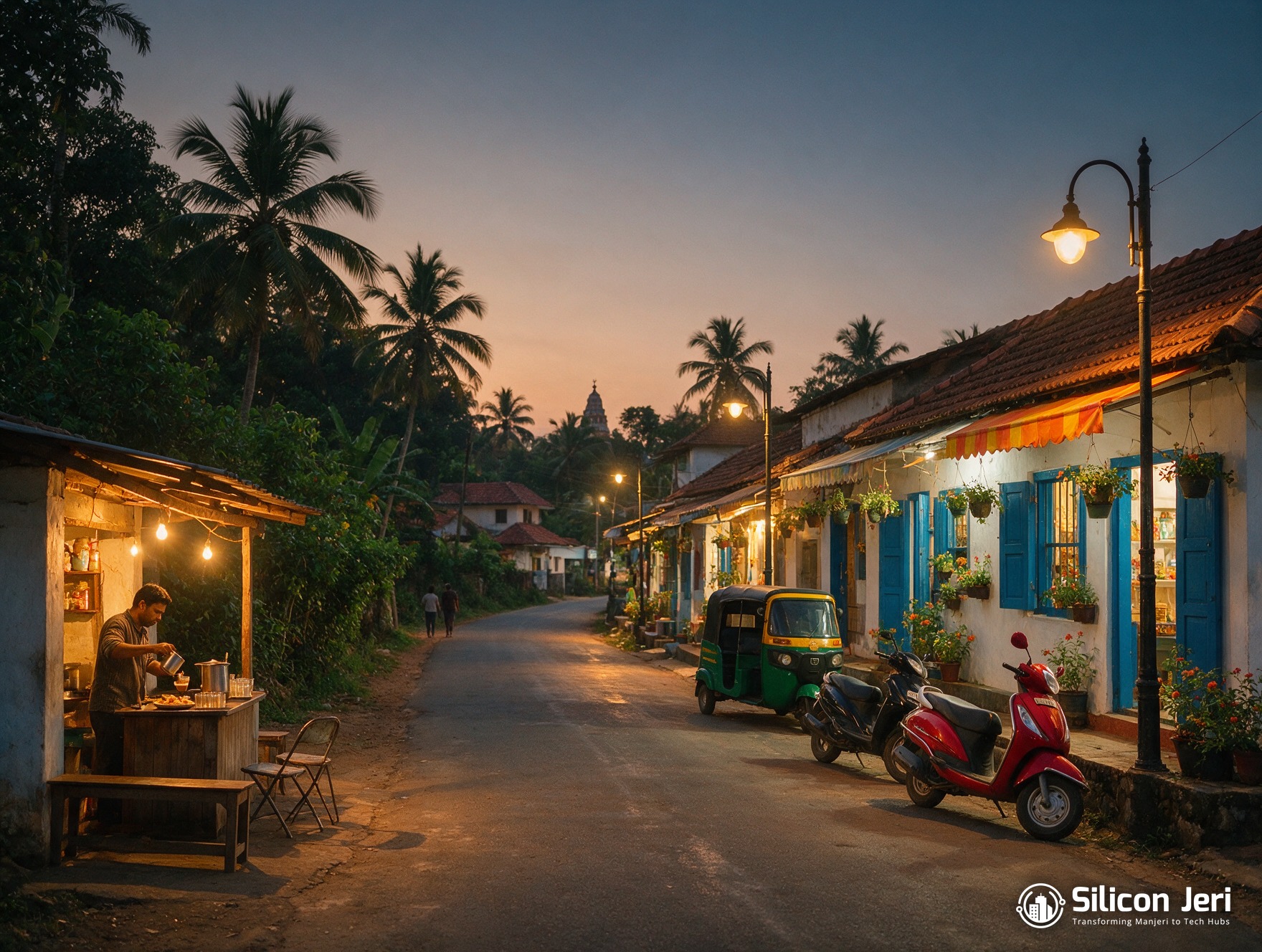
Ask around the campus and nearby offices, and a pattern comes up again and again. Some women who work late say they now see more familiar faces on their evening commute than they used to. Tea stalls near the tech corridor stay open a little longer. Auto drivers who once wrapped up early now wait for a second wave of office traffic closer to 9 pm.
Here is a simple before and after, based on how people describe it, not on any measured survey:
- Before: Streets near the town center thinned out noticeably by early evening. A woman walking alone after dark was unusual enough to attract attention.
- Now: It is becoming more common to see small groups of women, often coworkers, walking to autos or two-wheelers together after a late call.
- Before: Family members often expected daughters or wives to be home before dark, regardless of work reasons.
- Now: Some families still hold that line, but others have started to bend it, especially once a steady tech job is involved.
None of this means the town has flipped overnight. It means the exceptions are becoming a little less exceptional. But is that acceptance coming from families too, or just from the streets? That is worth a closer look.
Are families actually on board with this, or just tolerating it?
It depends heavily on the household. Some parents who once worried about a daughter’s evening commute say they have grown more comfortable once they saw the routine repeat safely, week after week. A steady paycheck and a recognizable employer name based at Silicon Jeri seem to help with that comfort, even if the parents cannot fully explain the job itself.
Other families have not moved much at all. It is still common to hear of a woman negotiating her work hours around a strict return time set by her household, or arranging a brother or cousin to pick her up so the timing question never comes up. This is not a story of universal change. It is a story of change happening unevenly, house by house.
There is also a quieter shift worth naming: some young women say they no longer feel they have to justify working late as much as they once did. The job itself has started to do some of that explaining for them. That said, plenty still feel they need a good reason ready, just in case someone asks.
Family attitudes are only half the picture, though. What about the roads and the reality of moving through them after dark?
Has safety on the ground actually improved?
This is where honesty matters most. A tech campus does not fix streetlights, does not add more women to auto stands, and does not change how safe a dark stretch of road feels on its own. Nothing here suggests that safety concerns in Manjeri have been solved, and it would be misleading to claim otherwise.
What seems to be happening instead is smaller and more practical:
- More women moving through the same evening hours means fewer people are the only one out at that time, which some describe as feeling less exposed, even if the actual risk has not changed much.
- Sharing live location with a parent, sibling, or roommate has become a routine habit for many women who work late, not just an occasional precaution.
- Group commutes, where two or three coworkers leave together and split off near home, are becoming a normal part of the evening routine near the campus.
- Concerns about poorly lit roads, isolated stretches, and unreliable transport after certain hours remain real and are not something a coworking campus alone can address.
In other words, the feeling of normalcy is growing faster than any actual improvement in infrastructure. That gap matters, and it is worth sitting with rather than glossing over.
Is this pattern unique to Manjeri, or part of something bigger?
Small towns across Kerala and other parts of India have seen similar shifts wherever a cluster of white-collar or tech jobs takes root. Women working late in a small town is not a new idea globally, but it is a fairly new experience for many families in Malabar specifically. Manjeri’s version of this story is shaped by its own mix of conservative family norms, strong community ties, and now, a visible tech identity through Silicon Jeri.
What makes this moment interesting is the overlap. A woman working late at a company based at the Silicon Jeri campus is not just changing her own routine. She may be one of the first in her extended family or neighborhood to normalize that pattern for others watching. Small towns notice these things quickly, for better and for worse.
That raises a fair question: what would it actually take for this to feel fully settled, rather than still new?
What is still missing before this feels fully normal?
Based on how people describe their daily reality, a few gaps stand out clearly:
- Consistent lighting and visibility on the routes between the campus area and residential neighborhoods, not just the main road.
- Reliable transport options later in the evening, since auto and cab availability can thin out well before offices actually close.
- Wider family buy-in beyond the households that already have a direct connection to tech work.
- Time, simply put. Norms in a small town shift slowly, and one growing campus cannot rewrite decades of habit on its own.
None of these gaps erase the progress that has happened. They just keep it honest. Manjeri is not “after dark and safe now.” It is after dark and a little more used to women being part of that picture, with real work still ahead.
Related reading: For a related honest look at gender and the workplace at Silicon Jeri, see why Silicon Jeri still loses female engineers after their first year. For a related look at how family attitudes are shifting alongside this, read how a steady tech job changed the marriage conversation for local engineers. For general background, see Wikipedia’s overview of the night-time economy.
Frequently Asked Questions
Has Silicon Jeri made Manjeri safer for women at night?
Not on its own. A coworking campus does not change street lighting, transport, or policing. What it seems to have influenced is how normal it feels for more women to be out after dark, since a growing number now work jobs that require evening calls. Safety concerns in the town are still real and ongoing.
Why do tech workers in Manjeri end up working late so often?
Many companies based at the Silicon Jeri campus work with clients in other time zones, including the Gulf, Europe, and the United States. Calls and demos scheduled around a client’s business hours often fall in the evening for someone working from Manjeri.
Are families in Manjeri comfortable with women working late?
It varies by household. Some families have grown more comfortable after seeing a steady, repeated routine tied to a real job. Others still expect an earlier return, and many women manage this by arranging rides with family members rather than changing the family’s expectations.
What precautions do women who work late in Manjeri usually take?
Common habits include sharing live location with a parent or roommate, leaving the office in a small group with coworkers, and choosing familiar, well traveled routes home rather than shorter but quieter ones.
Is this kind of change unique to Manjeri?
No. Similar shifts have appeared in other small towns wherever a cluster of white collar or tech jobs takes root. What is notable for Manjeri is how new this pattern is against its more conservative family norms in the Malabar region.