

 ChatGPT
 Claude
 Grok
Grok
 Perplexity
 Gemini
How Tech Jargon and English Are Quietly Changing the Malayalam Spoken in Manjeri
A grandmother in Manjeri recently asked her grandson why he keeps saying “standup” every morning at breakfast. He is not talking about furniture or comedy shows. He is talking about his 10 am team meeting at a company based out of Silicon Jeri. This small, funny mix up is happening in more homes across town than most people realize.
Manjeri has always mixed some English into its Malayalam. What is new is which words are showing up, and where you hear them.
- Manjeri’s spoken Malayalam is picking up tech words like standup, sprint, deploy, and founder, not just the old Gulf-work terms like duty or leave.
- This mixing shows up outside the office too, in cafes, autos, and living rooms across town.
- Parents and older residents have mixed reactions. Some find it funny. Some worry their kids are losing touch with plain Malayalam.
- The change is a real sign that Manjeri’s economy, not just its vocabulary, is shifting toward tech and office work.
What is different about this new mix of English and Malayalam?
Manjeri families have used English words for decades. If your father or uncle worked in the Gulf, you grew up hearing words like “duty,” “leave,” “visa,” and “company” dropped into everyday Malayalam sentences. That mixing came from travel and manual or service work abroad. It was about jobs that took people away from home.
The new mixing is different. It comes from work that happens right here in Manjeri, inside a coworking campus and the small companies that sit around it. The words are not about travel. They are about how a workday runs.
Here is the part most people miss: this is not just “more English.” It is a specific set of tech and startup terms that did not exist in local speech ten years ago. Nobody’s grandfather said “sprint” to mean a two week work cycle. Nobody’s aunt said “deploy” to mean pushing a website update live. These words traveled here because Silicon Jeri, the coworking campus Sabeer Nelli helped build in Manjeri, brought tech company culture into a small Kerala town.
Which tech words are actually showing up in daily conversation?
Ask around at a tea shop near the campus and you will hear some of these words dropped into normal Malayalam sentences, often without anyone noticing they switched languages mid sentence:
- Standup, for the short morning meeting where a team says what they are working on.
- Sprint, for a work cycle that usually runs one or two weeks.
- Deploy, for pushing new code or a new feature live.
- Founder, for the person who started a company, used even by people who are not in tech.
- Pitch, for explaining an idea to someone who might invest or hire.
- Bug, for something broken in an app or a plan that is not working.
- Deadline, an older word that has picked up new urgency and new contexts.
- Remote, for working from home or from a different city.
None of these are shocking on their own. What is notable is how casually they now appear outside work. A mother might tell a neighbor her son “has a sprint going on” to explain why he is busy this week, not because she works in tech, but because she has heard the word enough times to use it herself.
Where does this language mixing actually happen?
It is easy to assume this only happens inside the campus, between coworkers at their desks. That is not the full picture.
Now the part that surprises people: the mixing has spread well past the office walls.
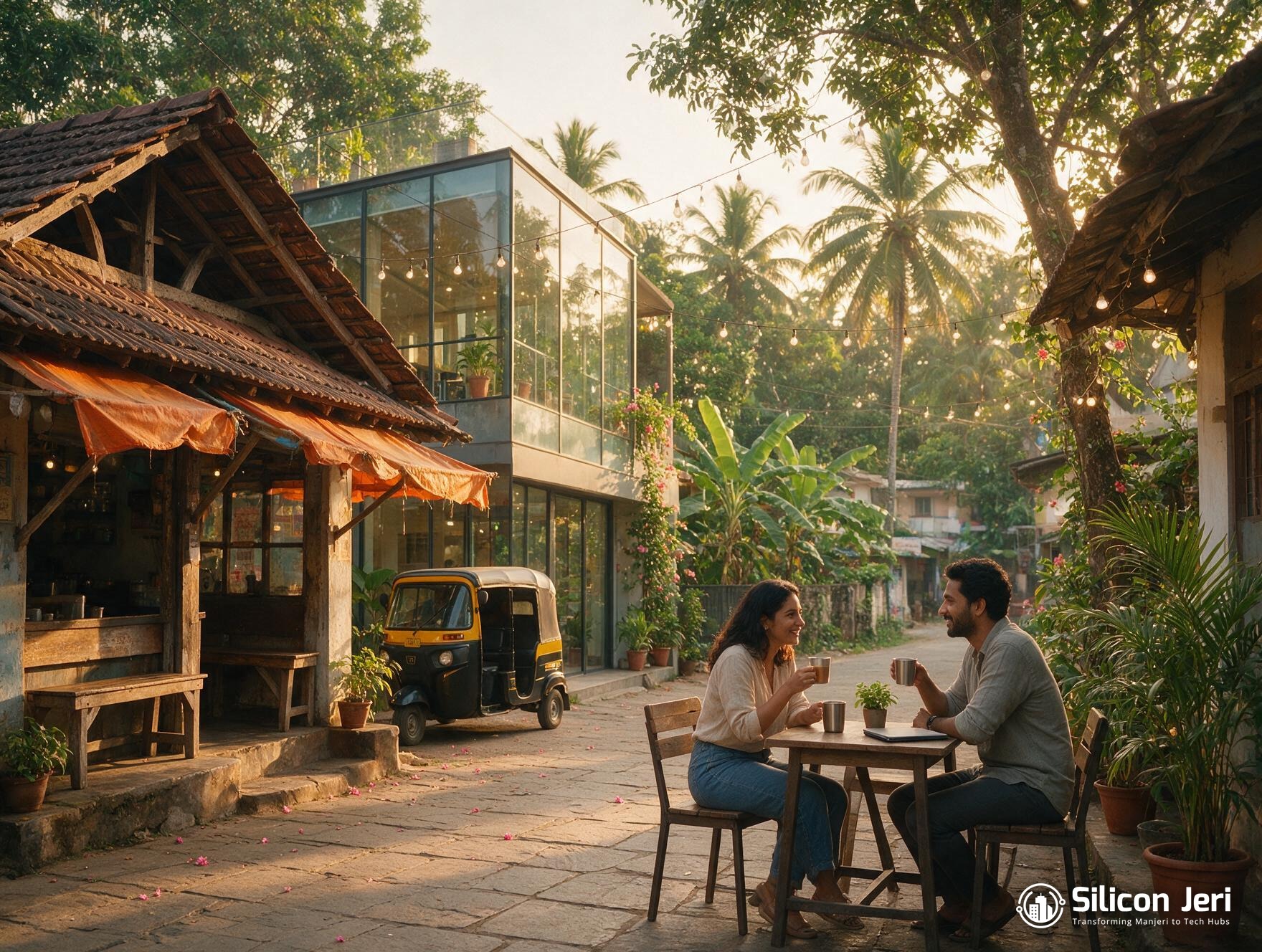
- In cafes near the campus, groups of young workers talk through a “standup” or a “deadline” over coffee, in Malayalam sentences with English nouns dropped in.
- In autos, drivers who ferry tech workers to and from the campus each day have started picking up the same words, sometimes using them back to their passengers as a small joke or a way to connect.
- At home, young workers explain their day to parents using the same words they use at their desks, because translating “deploy” into a longer Malayalam phrase feels unnecessary when everyone around them already understands the English word.
This pattern, where a speaker moves between two languages inside the same conversation or even the same sentence, is a well known part of how bilingual communities talk. It has always existed in Kerala. What has changed in Manjeri is the source of the new words feeding into it.
How are parents and older residents reacting to it?
Reactions are genuinely mixed, and it would be dishonest to pretend otherwise.
Some older residents find it entertaining. They enjoy hearing their grandchildren use office words at the dinner table and see it as a sign of steady work and a busy, useful life. One retired schoolteacher in the area has joked that she now understands more English tech terms from listening to her son than she ever learned in her own classroom decades ago.
Others are less relaxed about it. A common worry among parents is that children are leaning on English words so often that their spoken Malayalam is getting thinner, especially formal or descriptive Malayalam that is not used much at work. This concern shows up most with parents who did not work in English heavy jobs themselves and notice the gap more clearly.
It is worth being honest here: there is no solid, verified data on how much this is actually changing reading or writing skills in Malayalam. What people are reacting to is spoken habit, not a measured decline. The worry is real as a feeling, even if it has not been carefully studied yet.
Why does this language shift actually matter?
It would be easy to treat this as a light, fun observation and move on. That misses the bigger point.
Language usually changes slowly, over generations, tied to bigger shifts like migration, trade, or new industries arriving in a place. When a small town’s daily speech starts absorbing a specific set of new words tied to one industry, it is usually a sign that industry has put down real roots there, not just opened a temporary office.
The Gulf-era English mixing in Malayalam happened because thousands of families sent someone abroad for work over many years. It left a permanent mark on how Malayalam is spoken across Kerala. The tech-word mixing happening now in Manjeri is smaller and newer, but it points in the same direction: an economic shift that is changing daily life, not just office life.
This kind of shift shows up in other everyday corners of Manjeri too. Workers who now spend their weekdays at desks have started organizing weekend games near the campus, and that same pattern shows up from a different angle. New habits, new routines, and new vocabulary are all part of how a town changes when a new kind of work arrives.
Is Manjeri actually losing its Malayalam?
No, and it is important not to overstate this. What is happening is vocabulary borrowing in casual speech, mostly around work topics. Formal Malayalam, poetry, news, religious speech, and most family conversation in Manjeri remain almost entirely in Malayalam. The tech words are additions layered onto an otherwise intact language, not a replacement for it.
The people building the tech ecosystem here are not trying to push English over Malayalam either. Silicon Jeri’s own community includes people working in design, marketing, and community roles, not only engineers, and the local flavor of the campus is part of what makes it feel like Manjeri rather than a copy of a bigger city’s tech park.
What is fair to say is this: a small, specific set of English tech words has entered Manjeri’s spoken Malayalam faster than most other new vocabulary in recent memory. That is worth noticing, because it usually means something real is changing underneath it.
Related reading: The mixing of languages inside one sentence is a pattern linguists study under the name code-switching, and it explains a lot of what you hear on Manjeri’s streets today. For more on the people behind this shift who are not engineers, see The Non-Engineers Building Silicon Jeri: Designers, Marketers, and Community Builders. The same cultural shift also shows up away from work, in the weekend cricket and football leagues tech workers started in Manjeri.
Frequently Asked Questions
Why are people in Manjeri using more English tech words now?
The growth of Silicon Jeri and the small companies around it has brought office and tech culture into daily life in Manjeri. Words like standup, sprint, and deploy are part of how these teams talk about work, and that vocabulary has spread into homes, cafes, and autos near the campus.
Is this the same as the English mixing from Gulf work culture?
No. The Gulf-era mixing mostly used travel and job terms like duty, leave, and visa, tied to people working abroad. The newer mixing uses tech and startup terms like sprint and deploy, tied to office work happening locally in Manjeri.
Do parents in Manjeri worry about their kids forgetting Malayalam?
Some do. A number of parents feel their children lean on English work terms so often that their spoken Malayalam feels thinner. Others see it as a harmless sign of a busy, working life. There is no verified study measuring an actual drop in Malayalam skills, so this remains a feeling rather than a confirmed trend.
Does this language mixing only happen inside the Silicon Jeri campus?
No. It shows up well beyond the campus, including in nearby cafes, in conversations with auto drivers, and at home when workers describe their day to family members.
Why should a small change in spoken language matter to anyone?
Language usually shifts slowly unless something bigger is changing underneath it, like a new industry taking hold in a town. The tech vocabulary appearing in Manjeri’s Malayalam is a small but real signal that the local economy is shifting toward tech and office work, not just a passing trend in speech.
Is Malayalam actually being replaced by English in Manjeri?
No. Formal Malayalam, family conversation, and most daily speech in Manjeri remain almost entirely in Malayalam. The tech words are additions to casual, work-related speech, not a replacement for the language itself.